- by Admin ,
- Aug 16, 2026
.jpg.jpeg)
Gusau Is Not Blameless, But He Is Not Nigeria's Entire Football Problem
-
- by Lastborn,
- Aug 16, 2026
- in Football Politics
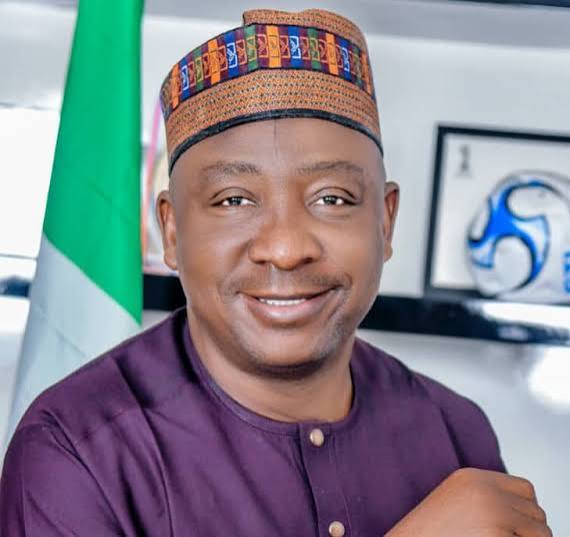
NFF President Ibrahim Gusau
Gusau Is Not Blameless, But He Is Not Nigeria's Entire Football Problem
By BSN Sports
The pressure on Nigeria Football Federation (NFF) President Ibrahim Musa Gusau has intensified following a difficult period for Nigerian football.
Calls for his resignation have grown louder amid disappointment over the performances and results of the national teams, with critics arguing that the NFF under Gusau has failed to provide the leadership required to restore Nigeria to the level expected of a football powerhouse.
But beneath the anger lies a more fundamental question: Is Gusau really the problem with Nigerian football, or is he merely the latest face of a much deeper institutional crisis?
There is a simple principle in leadership: the buck stops at the leader's desk.
As NFF president, Gusau cannot completely distance himself from the successes or failures recorded during his tenure. He is ultimately responsible for the direction of the federation, the quality of its leadership and the policies implemented under his watch.
He should therefore be held accountable where his administration has fallen short.
But accountability should not be confused with the convenient argument that removing one individual will automatically solve decades of structural problems.
A Crisis Older Than Gusau
Since the return of democratic administration to Nigerian football, the NFF has had a succession of presidents and administrators, including Emeka Omeruah, Abdulmumini Aminu, Kojo Williams, Dominic Oneya, Ibrahim Galadima, Sani Lulu, Aminu Maigari, Amaju Pinnick and, since 2022, Gusau.
Yet the complaints have remained remarkably familiar: poor administration, financial concerns, weak grassroots development, disputes over national-team appointments, inadequate infrastructure, problems within the domestic league and disagreements between stakeholders.
The personalities have changed. The arguments have not.
It is therefore difficult to present the current problems as though Nigerian football was functioning perfectly until Gusau arrived.
Nigeria's football history has always been a mixture of remarkable achievements and frustrating setbacks.
The Golden Eaglets' triumph at the inaugural FIFA U-16 World Championship in China in 1985 announced Nigeria as a major force in youth football. The country's U-20 side reached the 1989 FIFA World Youth Championship final, while the Super Eagles eventually qualified for their first FIFA World Cup in 1994 and went on to make an immediate impression.
But there were failures too.
Nigeria suffered a 4-1 defeat to Denmark at the 1998 World Cup. The national team also endured coaching and administrative controversies surrounding subsequent World Cup campaigns.
The Super Eagles' failure to qualify for the 2006 World Cup remains another painful example of how administrative and technical problems can combine to derail an otherwise talented generation.
None of those episodes occurred under Gusau.
The point is not to absolve the current NFF leadership. Rather, it is to establish that Nigerian football's problems are considerably older than the man currently occupying the federation's presidency.
The Enyimba Paradox
The same argument applies to club football.
For years, Nigerian clubs dominated domestic competitions but struggled to translate that success into continental glory.
It took until 2003 for Enyimba to win the CAF Champions League, despite Nigeria's enormous football talent and the long history of the domestic game.
That achievement was followed by another Champions League triumph in 2004, demonstrating what Nigerian clubs could accomplish when administration, investment, coaching and player quality aligned.
The question is why such success has not been sustained.
That is a structural question — and it cannot be answered simply by changing the NFF president.
Gusau Must Still Answer Difficult Questions
None of this means Gusau should be shielded from criticism. Far from it.
The NFF administration must answer legitimate questions about national-team performances, technical direction, player welfare, coaching appointments, youth development and the broader management of Nigerian football.
The Super Eagles' failure to qualify for the 2026 FIFA World Cup was particularly damaging because Nigeria had multiple opportunities to secure qualification before ultimately missing out.
The decline of the youth national teams is equally concerning. Nigeria's reputation as one of Africa's leading producers of young football talent has been built over decades, and failures at U-17 and U-20 level should trigger serious examination of the development pathway.
The Super Falcons' recent difficulties have added another layer to the debate, particularly given their status as one of Africa's most successful women's national teams. These failures demand accountability.
But accountability should also mean asking why the same problems repeatedly emerge under different administrations.
The Problem Goes Beyond the NFF Presidency
One of the most troubling aspects of Nigerian football is the tendency to personalise every crisis.
If a particular administrator is unpopular, everything wrong with football is attributed to him.
If a coach is appointed and fails, the coach becomes the problem.
If a preferred candidate is not selected, some supporters immediately begin waiting for that coach or administrator to fail so they can later claim they were right.
That is not football development. It is football politics. The same pattern has played out repeatedly within Nigerian football administration.
The history surrounding the League Management Company (LMC), for example, demonstrated how alliances can shift depending on who controls the system and who benefits from it.
People who oppose an administrator today can become his strongest supporters tomorrow — and vice versa — depending on where their interests lie.
That should force Nigerian football to confront an uncomfortable reality: sometimes the problem is not only who occupies the office, but the culture surrounding the office.
Gusau Can Leave — But What Comes Next?
Should Gusau leave office?
Yes, that is a legitimate position for anyone to hold.
Should Nigerians demand better leadership from the NFF? Absolutely.
But would Gusau's departure automatically solve Nigerian football's problems? No.
Replacing one president without fundamentally changing the system would simply restart the cycle.
A new administration would inherit many of the same problems: weak structures, inconsistent youth development, financial and administrative pressures, infrastructure deficits, domestic-league challenges and disagreements over technical direction.
And four years later, Nigerians could find themselves having exactly the same conversation about another NFF president.
Nigeria Needs More Than a New NFF President
What Nigerian football needs is institutional reform.
That should include greater transparency and accountability in football administration, a credible long-term technical development plan, stronger grassroots structures, improved youth development pathways, better domestic-league administration, investment in facilities, professionalisation of football management and clearer mechanisms for evaluating national-team coaches and technical programmes.
There must also be a culture in which national-team success is not used as the only measure of football development, while at the same time recognising that results remain an important measure of whether those structures are actually working.
The NFF needs to build systems that can survive changes in leadership.
That is the difference between an institution and an individual.
The Real Question
So, is Gusau the problem with Nigerian football?
He is part of the conversation, but he cannot reasonably be presented as the entire problem.
He should be judged on his decisions, his record and the direction of his administration. If Nigerians believe he has failed, they have every right to demand change.
But the debate should not end with “Gusau must go.”
The more important question is:
What comes after Gusau?
And perhaps even more importantly:
What kind of football administration do Nigerians want to build?
If the answer is simply to replace one person with another while preserving the same structures, incentives and political culture, then Nigerian football may simply find itself searching for another scapegoat a few years from now.
Nigeria has never lacked football talent.
What it has struggled to build consistently is a football system capable of turning that talent into sustained success.
Until that changes, changing the name on the NFF president's office may change the occupant — but not necessarily the outcome.

you may also read
- by Niyi Busari ,
- Aug 09, 2026
3SC, Aweroro Part Ways After Historic Continental Qualification
- by Niyi Busari ,
- Aug 05, 2026
2026 NFF Election: North Central FA Chairmen Back Gusau With ...
- by Lastborn ,
- Aug 04, 2026
0 Comments:
Leave a Reply