- by Niyi Busari ,
- Jul 01, 2026

Is It True That Morocco Is Leaving CAF for UEFA?
-
- by Niyi Busari,
- Jan 23, 2026
- in CAF
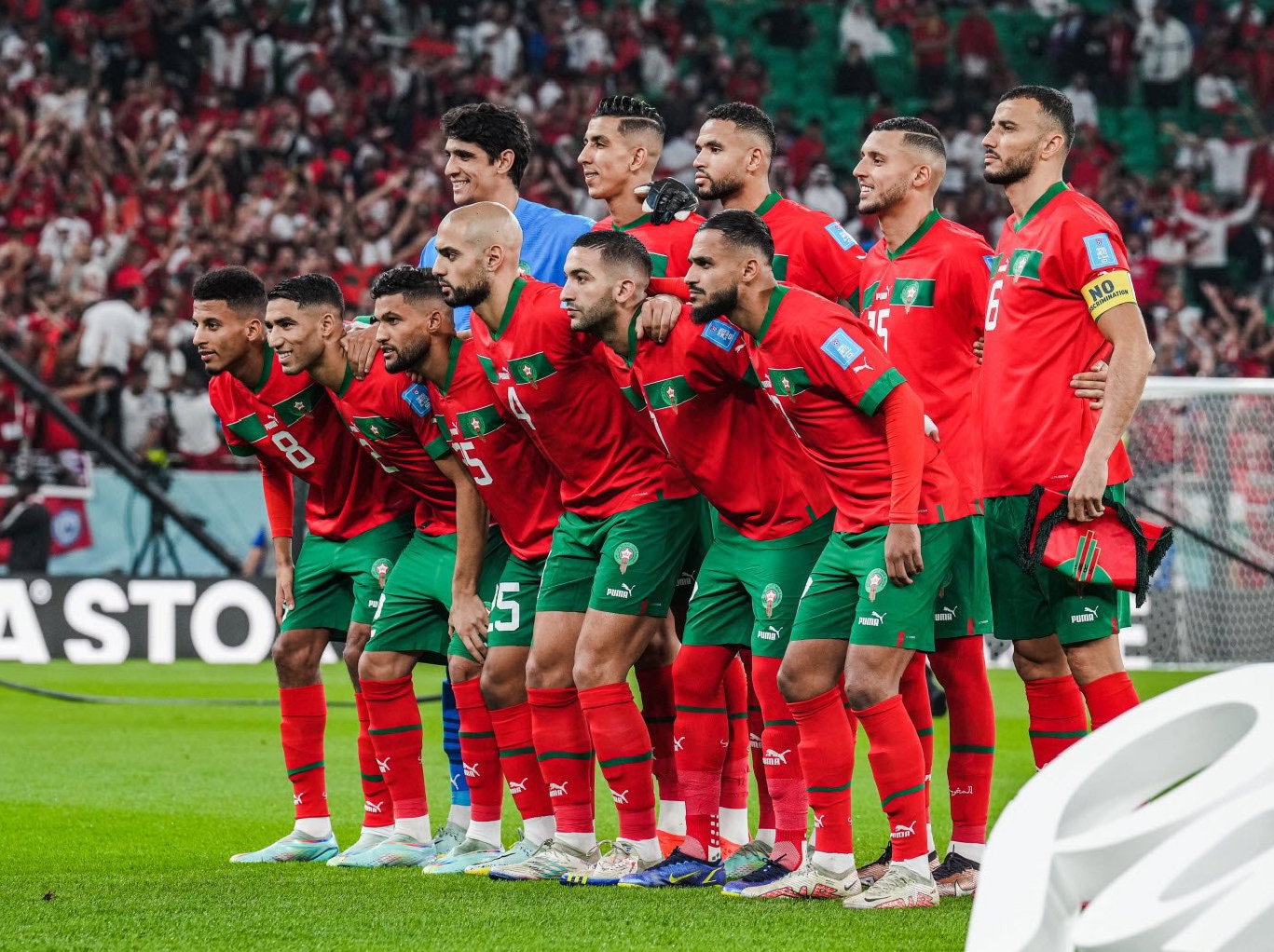
Is It True That Morocco Is Leaving CAF for UEFA?
By Admin
In the emotionally charged aftermath of the Africa Cup of Nations (AFCON) final, social media platforms were flooded with a mix of misinformation, speculation, and deliberately amplified narratives that capitalized on collective frustration.
As is often the case following contentious sporting moments, simplified explanations gained traction, particularly among Moroccan fans who interpreted the result as further evidence of perceived injustice within African football. For some, the episode reinforced a long-standing sentiment of marginalization despite Morocco’s sustained engagement, investment, and openness toward the continent’s football ecosystem.
Within this climate, speculative and emotionally driven claims found fertile ground. Chief among them were viral posts alleging that Morocco had formally applied to withdraw from the Confederation of African Football (CAF) and seek membership of the Union of European Football Associations (UEFA), with some asserting—without evidence—that the country would feature at UEFA Euro 2028.
Presented alternately as citizen appeals or breaking news, these claims spread rapidly, merging sporting disappointment with legal misinformation. Over time, repetition transformed conjecture into perceived fact.
More exclusionary narratives also emerged. Some commentators argued that Morocco’s modern infrastructure, organizational standards, and investment levels had outpaced what they described as an African football culture slow to adapt to modernization. In its most extreme form, this argument suggested that the continent, in its current state, no longer “deserved” Morocco.
Conversely, hardline Africanist voices framed North African participation as an intrusion, with some openly asserting that continental football should remain exclusively Black, portraying Morocco’s hypothetical departure—or exclusion—as acceptable or even desirable.
The facts behind the claims
The reality, however, is unequivocal: Morocco has not applied to leave CAF, nor has it sought to join UEFA. No formal request exists, and no administrative or legal process is underway.
Despite claims attributing the story to “Moroccan media,” no announcement has been made by the Royal Moroccan Football Federation (FRMF). Likewise, there has been no confirmation from FIFA, UEFA, or CAF, and no coverage by credible Moroccan or international news agencies. In the absence of official documentation, the reports remain unfounded rumors.
What did occur was a formal complaint submitted by the FRMF to CAF and FIFA following incidents during the AFCON final against Senegal. The federation requested an investigation into the match events, a legitimate procedural response that was later conflated online with broader and inaccurate claims about confederation withdrawal.
Why a switch to UEFA is highly unlikely
FIFA statutes require national associations to belong to a confederation, with membership defined by geography. While FIFA regulations allow for exceptional cross-confederation membership under extraordinary circumstances, such moves require FIFA authorization, consultation with the geographically relevant confederation—in Morocco’s case, CAF—and acceptance by the destination confederation.
UEFA’s statutes impose additional constraints. Membership is generally restricted to European associations, with only narrow, conditional exceptions. An applicant must not belong to another confederation and must receive explicit FIFA approval. Even then, UEFA’s Congress retains full discretion, assessing sporting, political, and organizational implications. The process is lengthy, complex, and far removed from symbolic protest.
Historical precedents underline how rare such shifts are. Australia moved from the Oceania Football Confederation to the Asian Football Confederation in 2006 after extensive negotiations. Kazakhstan joined UEFA in 2002 following a similarly prolonged approval process, while Israel’s admission in 1994 followed decades of geopolitical exclusion from Asian competitions.
These cases demonstrate that confederation changes are exceptional, highly contextual, and driven by structural necessity—not short-term sporting dissatisfaction.
Morocco’s strategic focus remains African
Morocco’s broader football strategy further undermines the plausibility of a CAF exit. The country is preparing to co-host the 2030 FIFA World Cup alongside Spain and Portugal—the first joint hosting arrangement between Africa and Europe. Morocco’s role as a bridge between continents is central to the project’s political and sporting value.
FRMF President Fouzi Lekjaa reinforced this vision in a recent interview with France Football, emphasizing Morocco’s commitment to advancing African football through expertise-sharing, organizational reform, and institutional cooperation. Rather than advocating separation, Lekjaa proposed exploring joint Euro-African competitions as a means of raising standards and strengthening intercontinental ties.
Such proposals align with Morocco’s long-standing strategy of integration rather than withdrawal, and cooperation rather than confrontation.
It is also important to distinguish between confederation membership and participation in competitions outside one’s confederation. FIFA treats these as separate matters, both subject to strict approval processes. Participation by invitation does not constitute a change of confederation.
Against this regulatory backdrop, claims that Morocco would participate in UEFA Euro 2028—scheduled to be hosted by England, Scotland, Wales, and the Republic of Ireland—are without foundation. The tournament is reserved exclusively for UEFA member associations.
Conclusion
Morocco has not applied to leave CAF. It has not sought UEFA membership. No legal or institutional process exists to support such claims.
What does exist is a wave of emotional reaction amplified by social media and detached from football governance realities. Morocco remains firmly embedded within African football structures, pursuing its grievances through official channels while advocating cooperation, reform, and shared progress—consistent with its broader pan-African engagement and long-term strategic vision.
Credit: Morocco World News

you may also read
- by Niyi Busari ,
- Jul 01, 2026
Madugu Targets WAFCON Title Defence, 2027 World Cup Qualification
- by Sampson Adedeji ,
- Jun 30, 2026
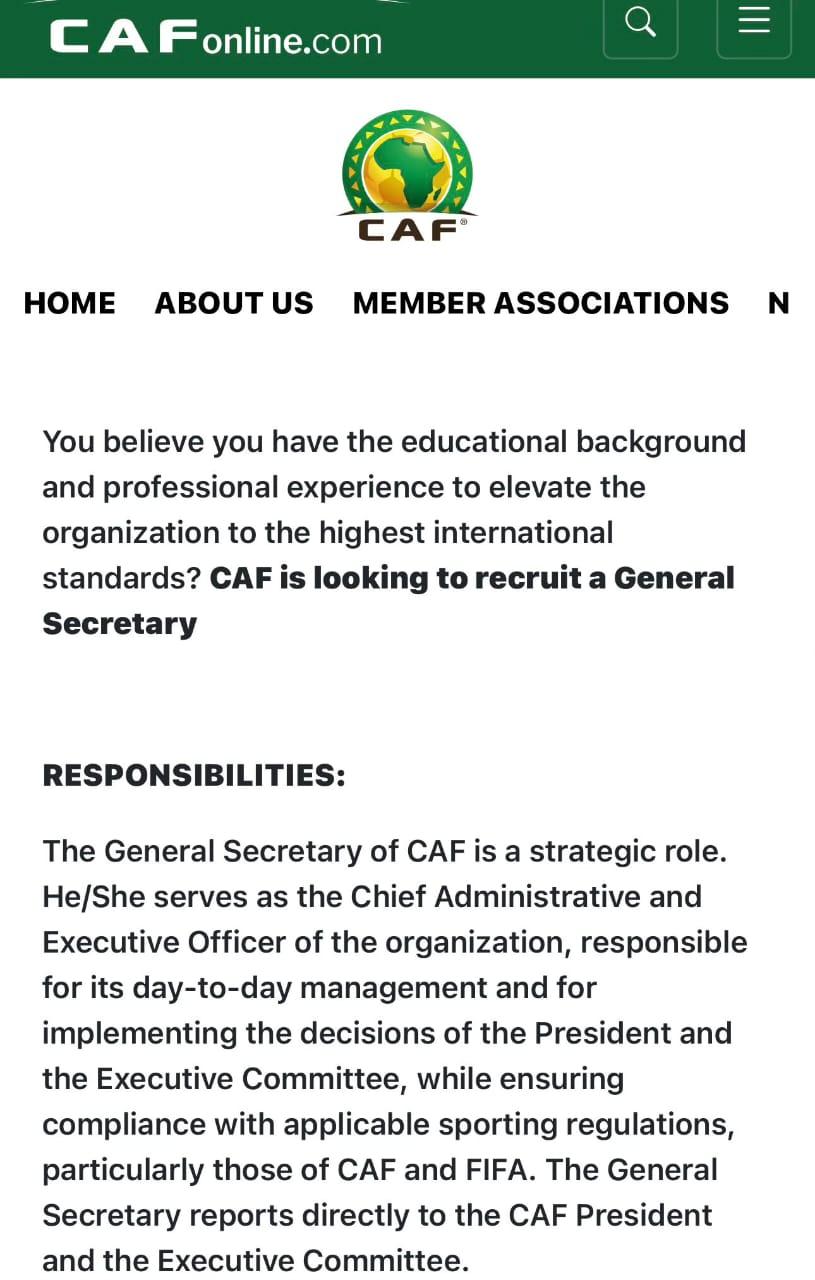
CAF Begins Search For Substantive General Secretary
- by Sampson Adedeji ,
- Jun 19, 2026
CAF Begins Consultations On Key AFCON 2027 Host Events
- by Sampson Adedeji ,
- Jun 03, 2026
0 Comments:
Leave a Reply