- by Sampson Adedeji ,
- Aug 15, 2026
.jpg.jpeg)
Likely Outcome, Step-by-Step Explanation In DR Congo Eligibility Dispute That Could Reshape Africa’s World Cup Race
-
- by Niyi Busari,
- Dec 19, 2025
- in World Cup
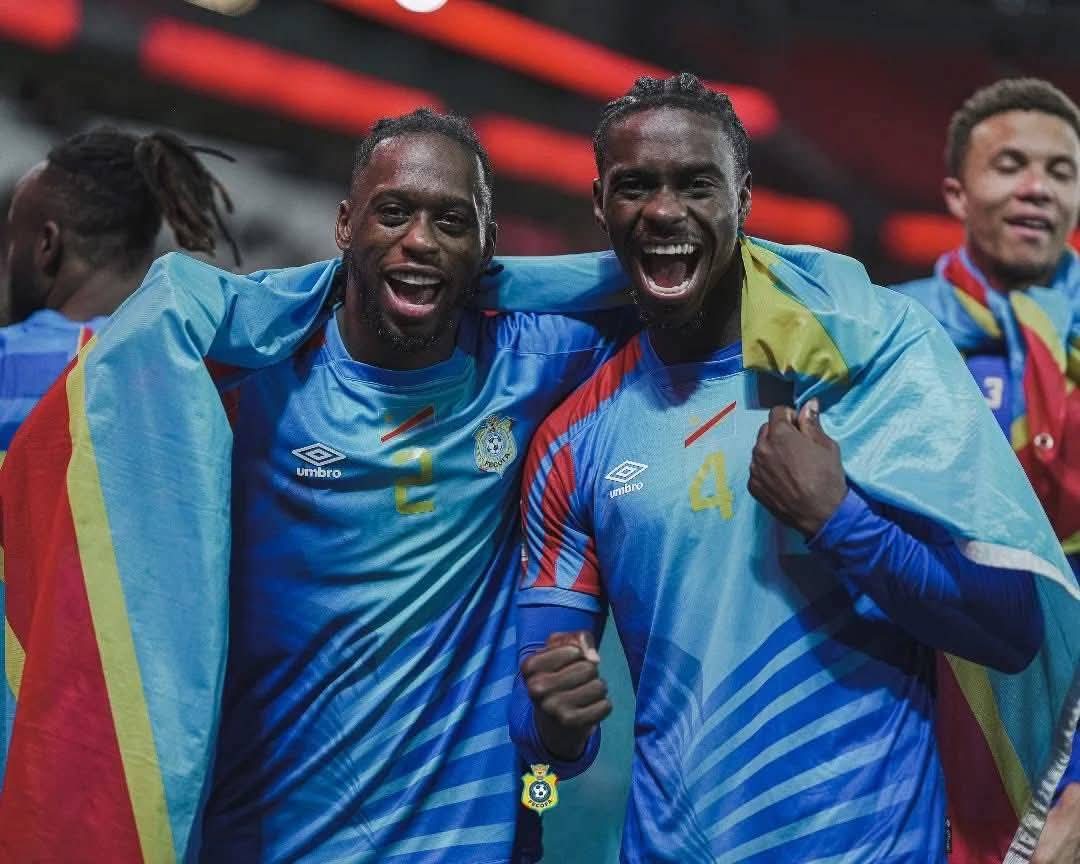
Aaron Was-Bissaka and other players jubilating after helping DR Congo qualifies for the FIFA Interncontinental playoff in Mexico
Likely Outcome, Step-by-Step Explanation In DR Congo Eligibility Dispute That Could Reshape Africa’s World Cup Race
By Admin
The African qualification race for the 2026 FIFA World Cup has been thrown into controversy following a growing dispute between Nigeria and the Democratic Republic of Congo over player eligibility, turning a dramatic playoff clash into one of the most complex football stories of 2025.
What began as a decisive one-off playoff has evolved into a legal and regulatory debate involving citizenship laws, FIFA eligibility rules and the balance between domestic legislation and international sporting governance. The outcome could yet have implications for Africa’s final representatives at the World Cup.
How the Playoff Unfolded
Nigeria and DR Congo met on November 16, 2025, in Rabat, Morocco, in a CAF playoff final that determined which team would advance to the inter-confederation playoffs.
Nigeria made a bright start, taking an early lead through Frank Onyeka. DR Congo responded with growing composure, and Meschack Elia levelled the score before halftime. Despite periods of pressure from both sides, neither team could find a winner in regulation time or extra time.
The contest was ultimately decided by penalties, where DR Congo prevailed 4–3. Their goalkeeper produced crucial saves, while Nigeria faltered from the spot. Captain Chancel Mbemba converted the decisive kick, sealing a famous victory and keeping Congolese World Cup hopes alive.
Why the Match Carried Huge Stakes
For DR Congo, the win represented a chance to return to the World Cup for the first time since 1974, marking a potential breakthrough after years of rebuilding and increased reliance on Europe-based players. Advancement to the inter-confederation playoffs offered a realistic path back to football’s biggest stage.
For Nigeria, the defeat was deeply damaging. It confirmed a second consecutive failure to qualify for the World Cup an outcome widely regarded as unacceptable for one of Africa’s most successful footballing nations. The loss intensified scrutiny of the national team’s management, coaching decisions and long-term planning.
The Controversy That Followed
In the immediate aftermath, comments from Nigeria’s head coach suggesting unusual behaviour by the DR Congo bench during the penalty shootout attracted attention but were largely dismissed as inconsequential.
The dispute took a more serious turn in December 2025, when the Nigeria Football Federation (NFF) submitted a formal petition to FIFA. The complaint alleged that DR Congo fielded ineligible players during the playoff, citing the country’s domestic citizenship laws.
DR Congo’s Citizenship Laws Explained
The Democratic Republic of Congo’s constitution generally does not recognise dual citizenship. Nationality is considered exclusive, meaning individuals are not permitted to hold Congolese citizenship alongside another nationality unless specific legal procedures are followed.
Nigeria’s argument centres on claims that several DR Congo players many born or raised abroad may not have fully complied with these domestic nationality requirements prior to representing the national team. While the players in question reportedly held Congolese passports, Nigeria maintains that possession of a passport alone does not necessarily satisfy Congolese constitutional provisions.
FIFA’s Eligibility Framework
FIFA determines player eligibility based on sporting nationality rather than a country’s internal constitutional law. To represent a nation, a player must hold that nationality and, where applicable, complete FIFA’s one-time switch process if previously capped at youth or senior level by another country.
In practice, FIFA treats a valid passport as sufficient proof of nationality, unless there is evidence of falsified documents or deliberate misrepresentation. DR Congo’s players were cleared by FIFA ahead of the qualifiers, forming the cornerstone of the Congolese federation’s defence.
What the Rules Suggest About the Likely Outcome
From a regulatory perspective, DR Congo’s position appears strong. All players involved in the playoff were officially cleared and deemed eligible under FIFA regulations at the time of the match. Eligibility is assessed at the point of competition, and retroactive sanctions are typically applied only when fraud or deception is established.
FIFA has historically been reluctant to overturn match results where players were cleared before kickoff and participated in good faith. Unless Nigeria can provide compelling evidence that FIFA was misled through fraudulent documentation or withheld information, a reversal of the result appears unlikely.
Where the Case Stands Now
FIFA has confirmed receipt of Nigeria’s petition and is reviewing the matter. No final decision has been announced. Possible outcomes range from dismissal of the complaint to administrative sanctions, with a reversal of the result considered a remote scenario.
In the meantime, DR Congo remains scheduled to take part in the inter-confederation playoffs for the 2026 World Cup, pending FIFA’s ruling. Nigeria’s qualification hopes now rest entirely on the administrative process rather than results on the pitch.
Why This Case Matters Beyond Both Nations
The dispute has broader implications for international football, particularly in Africa, where many national teams rely heavily on diaspora players. It underscores the tension between domestic citizenship laws and FIFA’s global eligibility system, and raises questions about whether clearer alignment or guidance is needed.
Whatever the final decision, the Nigeria–DR Congo World Cup saga of 2025 will be remembered not only for its dramatic penalty shootout, but also for the legal and regulatory challenges it has forced football’s governing bodies to confront.

you may also read
- by Sampson Adedeji ,
- Jul 20, 2026
World Cup 2026: Football Won At Last – Egypt Coach ...
- by Niyi Busari ,
- Jul 20, 2026
Mbappe Makes World Cup History With Second Golden Boot As ...
- by Lastborn ,
- Jul 20, 2026
Spain End Argentina's Reign To Lift 2026 World Cup Trophy
- by Niyi Busari ,
- Jul 20, 2026
Explained: How Six Nations Already Qualified For 2030 World Cup
- by Niyi Busari ,
- Jul 19, 2026
Mbappé Breaks World Cup Goal Records As England Claim Third ...
- by Niyi Busari ,
- Jul 18, 2026
Burna Boy To Perform At Historic 2026 World Cup Final ...

- by Sampson Adedeji ,
- Jul 17, 2026
3 Comments:
Leave a Reply