- by Niyi Busari ,
- Jun 13, 2026

Senegal’s AFCON Walkout Could Trigger Disqualification And World Cup Ban
-
- by Niyi Busari,
- Jan 28, 2026
- in FIFA
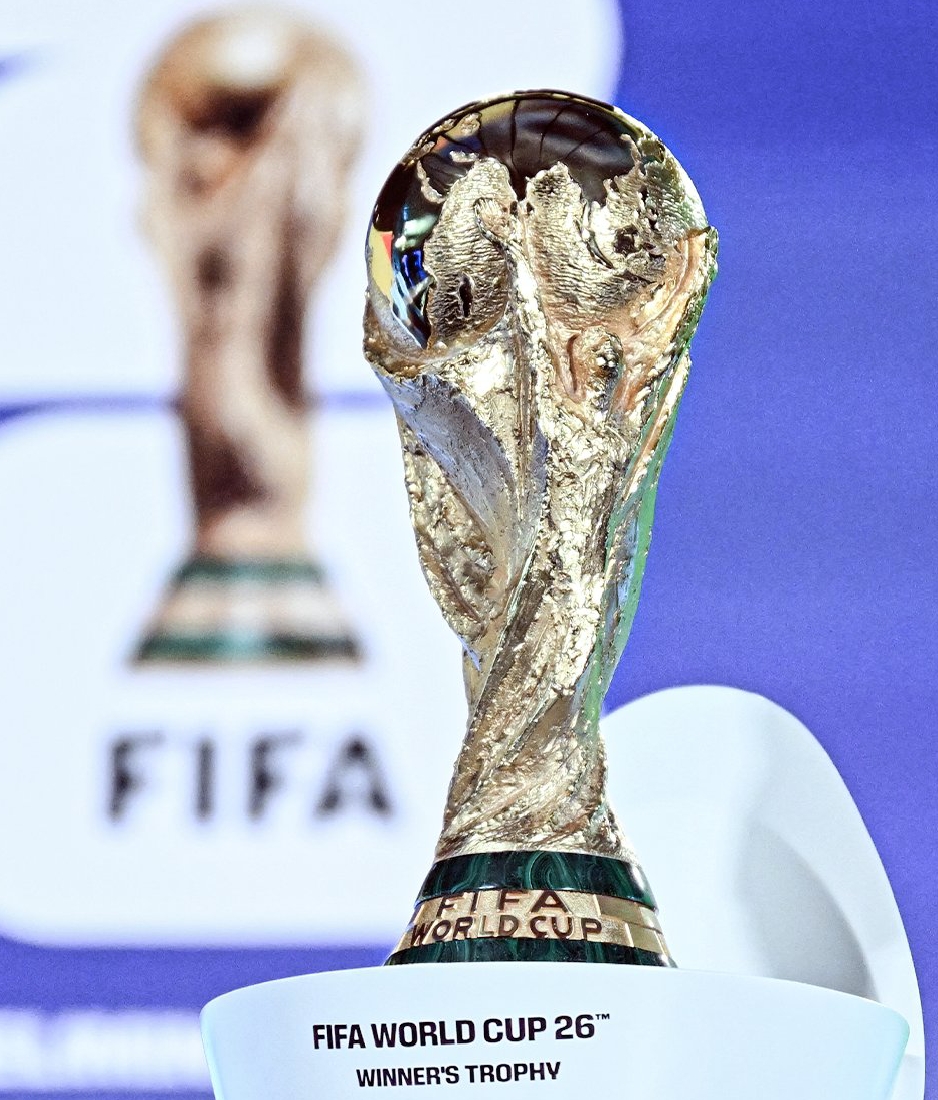
FIFA world cup trophy
Senegal’s AFCON Walkout Could Trigger Disqualification And World Cup Ban
By BSN Sports
As the Confederation of African Football (CAF) reviews the fallout from the disrupted 2025 Africa Cup of Nations (AFCON) final, legal experts are warning that the Senegal national team’s decision to abandon the match could have far-reaching consequences for African football, BSNSports.com.ng reports.
Moroccan lawyer Adil Mouline has described the incident as a defining moment for CAF’s authority and commitment to sporting justice, arguing that the governing body now faces a test that extends beyond a single disciplinary case.
In a detailed statement shared on X, Mouline framed CAF’s dilemma within a broader legal and governance context, noting that determining appropriate sanctions remains one of the most complex challenges in sport regulation.
“The biggest challenge faced by lawmakers, regulators, courts, judges, disciplinary committees and decision-makers in general, including sport’s governing bodies such as CAF and FIFA, lies in determining the most appropriate and adequate sanction when an individual or a group commits a violation,” Mouline wrote.
He stressed that the gravity of the incident is heightened by the stage on which it occurred. According to Mouline, the AFCON final represents a convergence of sporting integrity, organizational credibility and public expectation.
“This challenge is heightened in high-stakes competitions such as the AFCON 2025 final, where the integrity of the sport, the credibility of the organizers, and the expectations of millions of supporters converge,” he said, referring to Senegal’s withdrawal during the final against Morocco.
Mouline argues that the case should not be treated as an isolated disciplinary matter but as a moment that could shape how rules are enforced at the highest level of African football.
“The incident involving the Senegal national team’s decision to leave the field of play during the AFCON 2025 final against the Moroccan national team presents precisely such a challenge,” he said.
He noted that CAF’s Disciplinary Committee must consider multiple factors, including public order, stadium safety and crowd behaviour. However, he insists that the final decision must be guided by two fundamental principles: justice and deterrence.
“Above all, two overarching goals must shape CAF Disciplinary Committee’s approach to sanctions: justice and deterrence,” Mouline stated.
On the issue of justice, Mouline rejected any outcome that allows a team to gain advantage from breaching competition regulations.
“Justice requires that sanctions restore equilibrium. A team must not be allowed to benefit, directly or indirectly, from violations of competition rules,” he wrote.
He added that the impact of the walkout extends beyond the opposing team to the credibility of the tournament itself.
“Justice therefore seeks to reaffirm the integrity of the competition, uphold the rights of the non-offending team, and ensure that violations do not distort sporting fairness or competitive balance,” he said.
Mouline emphasized that deterrence is equally critical, particularly in a continental showpiece event.
“The imposed measures must send a clear and unequivocal message that abandoning a match, particularly on a stage as significant as an AFCON final, is never an acceptable or strategically advantageous course of action,” he said.
He warned that lenient sanctions could set a dangerous precedent. “A weak sanction risks sending the message that such violations are tolerable or strategically viable,” Mouline wrote, adding that a firm response would protect the sport’s long-term integrity and reinforce confidence in CAF’s governance.
Mouline’s proposed outcome is uncompromising. He argues that only the strongest measures would satisfy both justice and deterrence.
“In this context, the only sanction that can fulfill the overarching goals of justice and deterrence is the formal disqualification of the Senegal national team from the AFCON 2025 final, the nullification and extinguishment of any claim to the title or trophy arising from that match, and the suspension of the Senegal national team from the FIFA World Cup 2026,” he wrote.
He also suggested additional individual sanctions, including multi-year suspensions for officials such as the national team coach.
According to Mouline, CAF’s eventual ruling will resonate far beyond the immediate parties involved.
“Every sanction sets a precedent,” he warned, noting that the decision will influence how future violations are handled across CAF competitions.
As the disciplinary process continues, the stakes remain high. The outcome could determine not only the fate of the AFCON final, but also Senegal’s potential participation in the 2026 FIFA World Cup—and whether CAF asserts its authority at a pivotal moment for African football.

you may also read

- by Niyi Busari ,
- Jun 05, 2026
FIFA to Reward Clubs For 2026 World Cup Players
- by Sampson Adedeji ,
- May 22, 2026
Unity Cup Confirmed As FIFA Tier 1 Event Ahead Of ...

- by Niyi Busari ,
- May 08, 2026
Burna Boy and Shakira Set To Release FIFA 2026 World ...
- by Niyi Busari ,
- May 08, 2026
FIFA Unveils Squad Submission Timeline for 2026 World Cup

- by Niyi Busari ,
- May 01, 2026
Armenia, Georgia Host 2029 U-20 World Cup As Miami Lands ...
- by Sampson Adedeji ,
- Apr 30, 2026
0 Comments:
Leave a Reply