- by Niyi Busari ,
- Jun 13, 2026

Seven Football Powerhouses That Missed Back-to-Back FIFA World Cups
-

- by Niyi Busari,
- Apr 03, 2026
- in FIFA
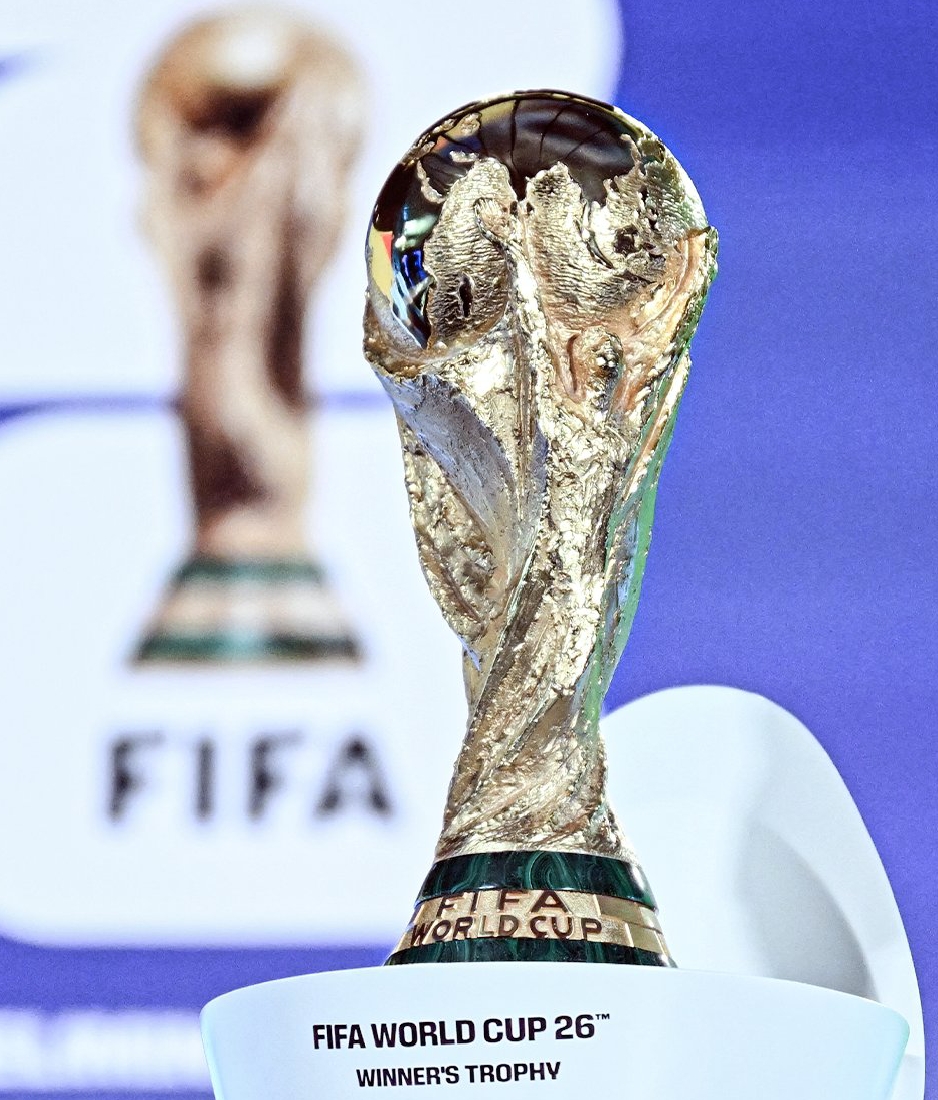
FIFA world cup trophy
Seven Football Powerhouses That Missed Back-to-Back FIFA World Cups
By Admin
Italy’s failure to qualify for the 2026 FIFA World Cup highlights a recurring reality in international football: even the sport’s most decorated nations are not immune to prolonged periods of underperformance.
Across continents and generations, several traditional powerhouses have endured similar setbacks, missing out on consecutive editions of the World Cup despite boasting rich histories and deep talent pools. These lapses are often symptomatic of transitional phases, managerial instability, or increasingly competitive qualification pathways.
While some nations have responded swiftly to reclaim their place among football’s elite, others have faced longer spells in the wilderness before returning to the global stage. Below is a closer look at seven prominent football nations that have experienced consecutive World Cup qualification failures.
Italy
Four-time world champions Italy will miss the FIFA World Cup for the third consecutive tournament in 2026, marking one of the most challenging periods in the nation’s football history.
The Azzurri’s latest setback came in a dramatic qualification defeat to Bosnia and Herzegovina, losing 4–1 on penalties after a 1–1 draw following extra time. This extended absence underscores a troubling trend for a country long regarded as one of football’s traditional giants.
Nigeria
Nigeria, Africa’s most consistent World Cup performers in the modern era, have now missed back-to-back tournaments in 2022 and 2026.
The Super Eagles, who made their debut in 1994 and became regular participants, have struggled in recent qualification campaigns, marking a significant dip after decades of relative consistency on the global stage.
England
England’s history includes an unexpected qualification slump during the 1970s.
After appearing in five consecutive World Cups between 1954 and 1970 — including their triumph in 1966 — the Three Lions failed to qualify for both the 1974 and 1978 tournaments. They later returned in 1982, beginning another run of appearances.
France
France have experienced two separate periods of consecutive World Cup absences.
After missing the 1970 and 1974 tournaments, Les Bleus returned strongly in the late 1970s and 1980s. However, another setback followed when they failed to qualify for the 1990 and 1994 editions. Since hosting and winning the tournament in 1998, France have maintained a consistent presence at the World Cup.
Senegal
Senegal burst onto the global scene with a remarkable quarter-final run at their debut in 2002.
However, the Teranga Lions subsequently failed to qualify for three consecutive tournaments — 2006, 2010, and 2014 — before re-establishing themselves with qualification for the 2018, 2022, and 2026 editions.
Netherlands
The Netherlands have endured multiple periods of absence despite their strong football pedigree.
The Dutch missed four consecutive World Cups between 1958 and 1970, before returning to reach the finals in 1974 and 1978. They later experienced another setback, failing to qualify for the 1982 and 1986 tournaments.
Uruguay
Uruguay, winners of the inaugural World Cup in 1930, have also faced repeated qualification challenges.
La Celeste missed consecutive tournaments in 1978 and 1982, and again in 1994 and 1998. Since their fourth-place finish in 2010, however, Uruguay have maintained consistent qualification for subsequent editions.
The history of World Cup qualification demonstrates that success in football is rarely linear. Even the most successful nations encounter periods of decline, shaped by generational change, tactical evolution, and increasing global competition.
For these seven countries, missing consecutive World Cups serves as both a reminder of football’s unpredictability and a testament to the resilience required to return to the sport’s biggest stage.

you may also read
- by Niyi Busari ,
- Jun 05, 2026
FIFA to Reward Clubs For 2026 World Cup Players
- by Sampson Adedeji ,
- May 22, 2026
Unity Cup Confirmed As FIFA Tier 1 Event Ahead Of ...

- by Niyi Busari ,
- May 08, 2026
Burna Boy and Shakira Set To Release FIFA 2026 World ...
- by Niyi Busari ,
- May 08, 2026
FIFA Unveils Squad Submission Timeline for 2026 World Cup

- by Niyi Busari ,
- May 01, 2026
Armenia, Georgia Host 2029 U-20 World Cup As Miami Lands ...
- by Sampson Adedeji ,
- Apr 30, 2026
0 Comments:
Leave a Reply