
- by Sampson Adedeji ,
- Jul 12, 2026

Three Continents, One World Cup: FIFA Unveils Historic 2030 Tournament Format
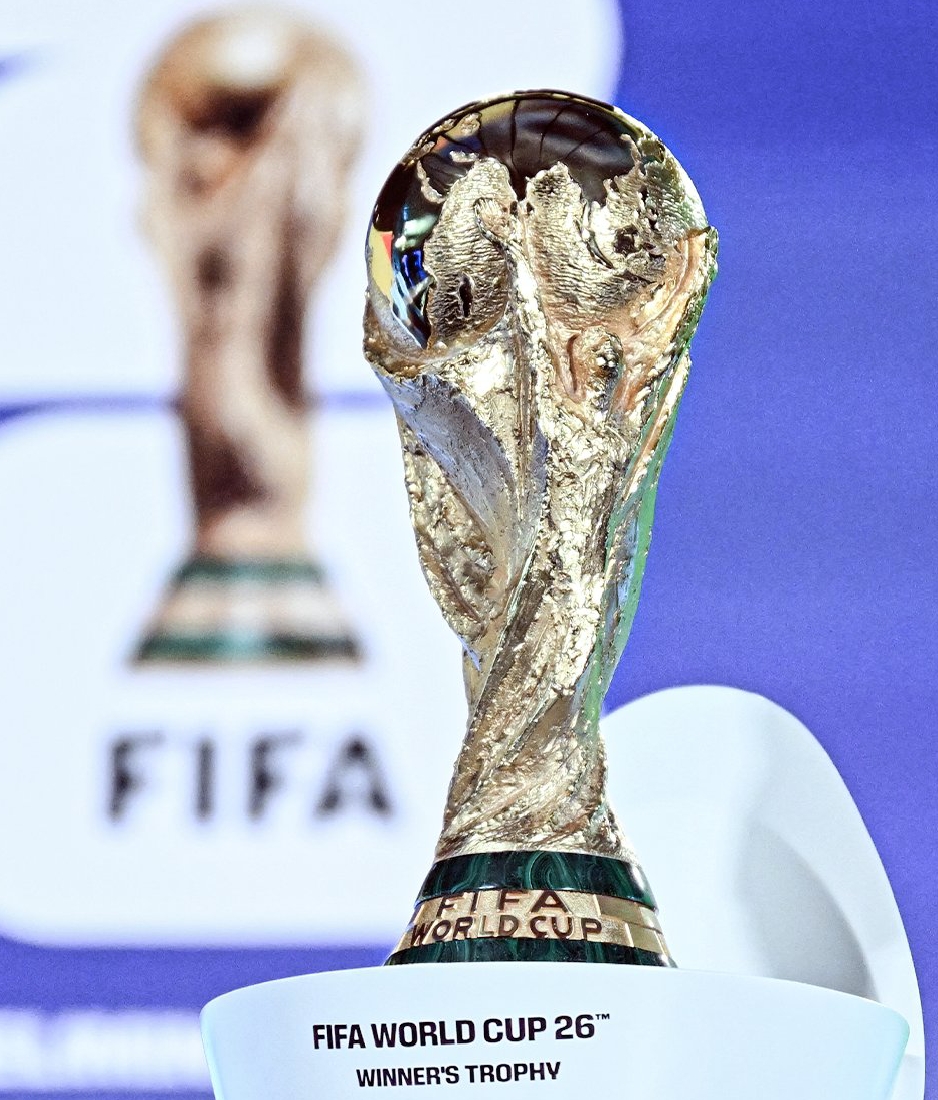
FIFA world cup trophy
Three Continents, One World Cup: FIFA Unveils Historic 2030 Tournament Format
By Admin
The 2030 FIFA World Cup will make history by becoming the first edition of football's biggest tournament to stage opening matches across three continents, as FIFA commemorates the competition's 100th anniversary, BSNSports.com.ng reports.
The tournament will be jointly hosted by Morocco, Spain and Portugal, while Argentina, Uruguay and Paraguay will each stage one opening match in recognition of South America's historic role as the birthplace of the FIFA World Cup. Uruguay hosted and won the inaugural tournament in 1930.
Like the expanded 2026 edition, the 2030 World Cup will feature 48 participating nations.
Meanwhile, Sunday's 2026 FIFA World Cup final at MetLife Stadium in East Rutherford, New Jersey, is expected to feature several ceremonial highlights. The FIFA World Cup Trophy will be presented in a bespoke Louis Vuitton Trophy Trunk, continuing a tradition the French luxury fashion house has maintained since the 2010 tournament.
The final is also expected to attract a host of world leaders and dignitaries, with reports indicating that United States President Donald Trump and Spanish Prime Minister Pedro Sánchez will be among the high-profile guests in attendance.
Tournament officials have appointed Slovenian referee Slavko Vinčić to officiate the final, assisted by fellow Slovenians on the touchlines.
The match is also expected to set records off the pitch, with reports suggesting that premium ticket prices have reached unprecedented levels for a major sporting event.
Several players representing Spanish club Atlético Madrid have featured prominently at the tournament, underlining the club's significant contribution to this year's World Cup. Among them are Spain internationals Marcos Llorente, Álex Baena, Marc Pubill and Alejandro Grimaldo, while Argentina's squad includes Juan Musso, Nahuel Molina, Julián Álvarez, Giuliano Simeone, Thiago Almada and Nicolás González. Uruguay defender José María Giménez and Norway striker Alexander Sørloth also represented Atlético Madrid during the competition.
Statistics from the tournament indicate that Argentina committed the highest number of fouls, recording 88 in seven matches. Switzerland followed with 87 fouls in six games, while Spain ranked third with 80 fouls in seven matches. Belgium, England, Morocco and Canada also ranked among the teams with the highest foul counts.
Despite topping the foul statistics, Argentina accumulated only nine yellow cards and avoided a red card throughout the tournament, suggesting that many of the infringements resulted from tactical pressing and defensive play rather than dangerous challenges—an interpretation that is likely to remain a subject of debate among football analysts.
As anticipation builds for Sunday's final, football fans around the world will be watching not only to see who lifts the trophy but also to witness the closing chapter of a tournament that has already produced memorable moments while setting the stage for a landmark centenary World Cup in 2030.

you may also read


- by Niyi Busari ,
- Jun 05, 2026
FIFA to Reward Clubs For 2026 World Cup Players
- by Sampson Adedeji ,
- May 22, 2026
Unity Cup Confirmed As FIFA Tier 1 Event Ahead Of ...

- by Niyi Busari ,
- May 08, 2026
Burna Boy and Shakira Set To Release FIFA 2026 World ...
- by Niyi Busari ,
- May 08, 2026
FIFA Unveils Squad Submission Timeline for 2026 World Cup

- by Niyi Busari ,
- May 01, 2026
0 Comments:
Leave a Reply