- by Niyi Busari ,
- Jun 13, 2026

Why DR Congo Could Lose Its 2026 World Cup Playoff Spot After Nigeria’s FIFA Petition
-

- by Sampson Adedeji,
- Dec 18, 2025
- in FIFA
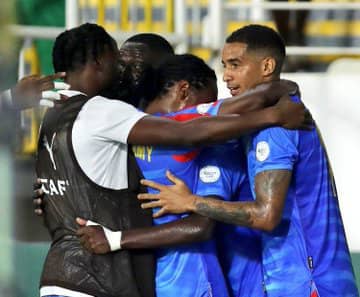
Why DR Congo Could Lose Its 2026 World Cup Playoff Spot After Nigeria’s FIFA Petition
Sampson Adedeji
What should have been a celebratory moment for the Democratic Republic of Congo has rapidly turned into an anxious period of uncertainty, BSNSports.com.ng reports.
Following the conclusion of the CAF World Cup playoff final, the Nigeria Football Federation (NFF) formally submitted a petition to FIFA, alleging that DR Congo fielded players who were not legally eligible to represent the country.
Should FIFA’s investigation validate these claims, the implications could be severe not only for the individuals involved but for DR Congo’s entire 2026 World Cup campaign.
This issue is not rooted in footballing performance or technical interpretation. It is a matter of law, documentation, and FIFA’s uncompromising stance on player eligibility.
The Core Issue: Nationality, Not Talent At the heart of the dispute lies Congolese nationality law, which is notably strict and unambiguous.
Under the Constitution of the Democratic Republic of Congo, nationality cannot be acquired casually or through administrative shortcuts.
Foreign nationals may only become Congolese through clearly defined legal pathways naturalization, marriage, option, or adoption and even then, only when the state determines that such acquisition serves the national interest.
Crucially, approval is not automatic. The process must pass through multiple layers of government, including the National Assembly, the Council of Ministers, and ultimately the President.
In practical terms, possession of a Congolese passport alone does not establish legal nationality.
Naturalization requirements include: Proven good character No serious criminal convictions A minimum of seven years’ residence (or five years of permanent residency) Clear evidence that the applicant’s citizenship benefits the national interest
Additionally, DR Congo does not generally recognize dual nationality. The only limited exception applies to children born abroad, and even then only until the age of 21, after which one nationality must be formally renounced.
If any player’s nationality was obtained outside these constitutional provisions, their eligibility and the validity of any match they featured in is fundamentally compromised.
Why FIFA Treats This as a Zero-Tolerance Offence FIFA clears players based on documentation submitted by national associations, operating on the principle of good faith.
However, that clearance is neither absolute nor irreversible. When evidence of fraud, misrepresentation, or falsification emerges, FIFA intervenes decisively.
Article 22 of the FIFA Disciplinary Code (Falsification and Forgery) provides a clear framework: If a player’s nationality is later determined to have been fraudulently acquired, FIFA withdraws the player’s eligibility and imposes disciplinary sanctions.
This is precisely what the NFF is asking FIFA to investigate. The Consequences If Ineligibility Is Proven FIFA’s disciplinary precedents leave little room for discretion or leniency.
If any ineligible player participated in the playoff match: The player’s eligibility is immediately revoked Lengthy suspensions are imposed, often a minimum of 12 months
The national association faces substantial financial penalties Matches are forfeited, typically recorded as 3–0 defeats In aggravated cases, teams may be expelled from competitions
Where falsified government documents are involved, matters can extend beyond football, triggering potential criminal investigations at state level.
A Recent and Relevant Precedent This scenario is far from hypothetical. In late 2025, FIFA sanctioned the Football Association of Malaysia after determining that forged birth certificates had been used to fabricate eligibility claims for several players.
FIFA classified the act as deliberate cheating, imposed 12-month suspensions on the players, and levied heavy fines against the association.
The principle was unequivocal: When eligibility is built on false documentation, sporting results do not stand.
Why DR Congo’s World Cup Ticket Is Now in Jeopardy
If FIFA establishes that any DR Congo player in the CAF playoff final: Failed to meet the country’s legal nationality requirements Illegally held dual nationality Or relied on falsified or misleading documents.
Then FIFA would be compelled to annul the match result and apply forfeiture regulations. Such a ruling would almost certainly strip DR Congo of its place in the 2026 Intercontinental Playoffs not as a discretionary punishment, but as a mandatory enforcement of FIFA’s statutes.
For now, DR Congo waits. But the legal and regulatory framework suggests that this case is not about sentiment or sympathy it is about compliance.
And FIFA’s history shows that when eligibility rules are breached, reputations, results, and World Cup dreams can vanish overnight.

you may also read
- by Niyi Busari ,
- Jun 05, 2026
FIFA to Reward Clubs For 2026 World Cup Players
- by Sampson Adedeji ,
- May 22, 2026
Unity Cup Confirmed As FIFA Tier 1 Event Ahead Of ...

- by Niyi Busari ,
- May 08, 2026
Burna Boy and Shakira Set To Release FIFA 2026 World ...
- by Niyi Busari ,
- May 08, 2026
FIFA Unveils Squad Submission Timeline for 2026 World Cup
- by Niyi Busari ,
- May 01, 2026
Armenia, Georgia Host 2029 U-20 World Cup As Miami Lands ...
- by Sampson Adedeji ,
- Apr 30, 2026
11 Comments:
Leave a Reply